AIAA AVIATION Forum · June 8–12, 2026 · Paper AIAA-2026-4045
Hans G. Kraus — Innovair Creation, Development & Operation of Special Aircraft
Dr. Felipe J. da Costa — BRENG Engineering and Technology
At AIAA AVIATION 2026, organized by the American Institute of Aeronautics and Astronautics, Eternaus presented to the international aerospace community the fourth generation of airships — the Super-Rigid Airships — together with the first numerical validation of its demonstrator, the Explorer 16.9/100 H₂.
“Our atmosphere is an immense navigable ocean… and we simply stopped exploring it.” With these words, Hans G. Kraus introduced a new aerospace architecture: not a blimp, not a semi-rigid, not a hybrid and not a balloon, but a symbiosis of airplanes, helicopters, drones and airships — a new category of aircraft that combines the best of each world.
Its foundation is the principle of Bidirectional Prestressing: pressure is not just lift — pressure becomes structure. The result is an aircraft that does not bend, deform, collapse or fatigue, even under extreme weather conditions. It is the evolution from rigid to super-rigid.
The Eternaus architecture carries the technological lineage of the Hindenburg, the largest transport vehicle ever built and operated. In 1999, Hans G. Kraus visited Dr. Klaus Hagenlocher, the engineer behind the Zeppelin NT, who shared valuable technical insights and original Hindenburg data. In 2006, on seeing the completed concept, he called it the best airship project he had ever seen.
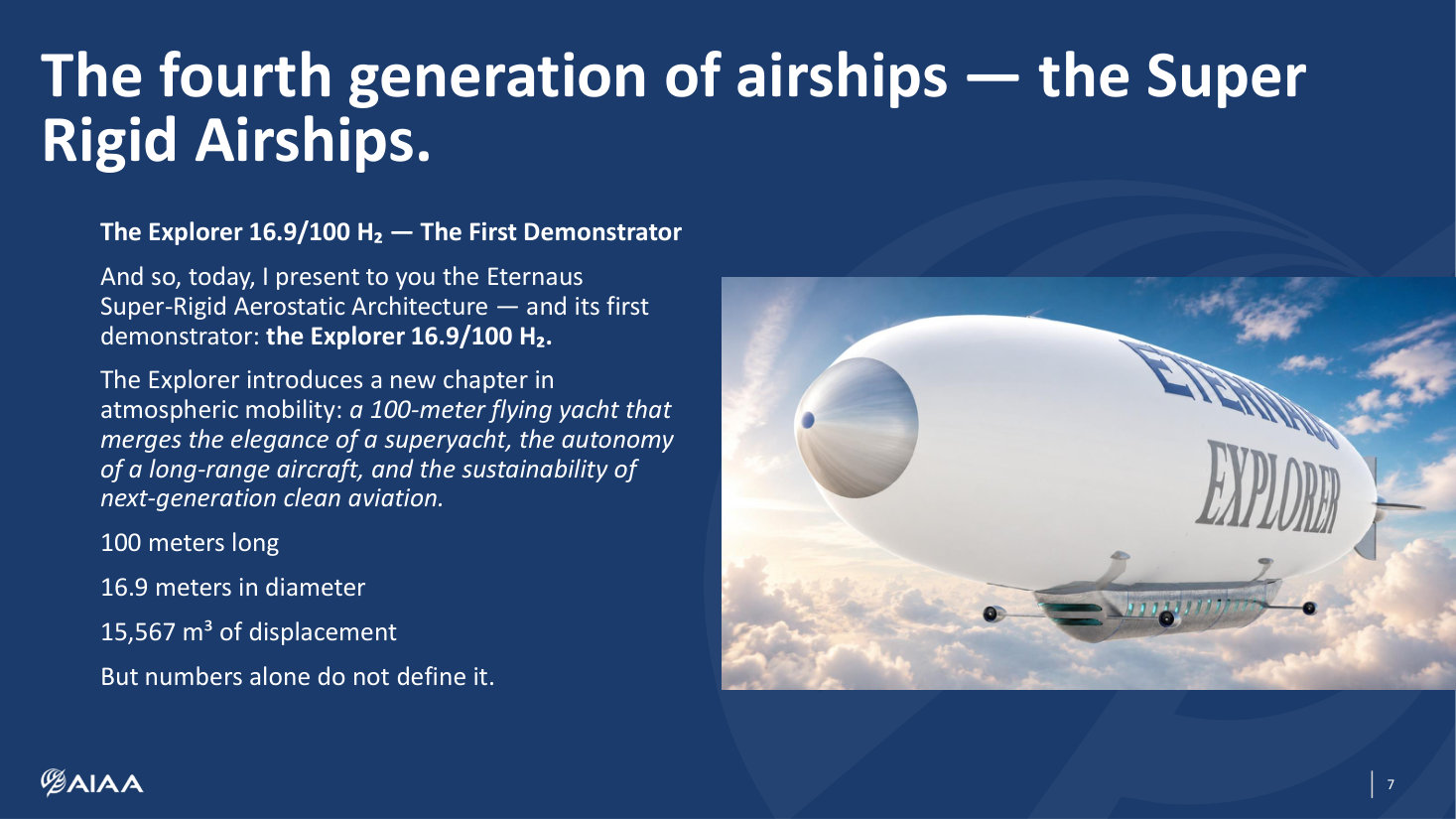
A 100-meter flying yacht that merges the elegance of a superyacht, the autonomy of a long-range aircraft and the sustainability of next-generation clean aviation. More than an aircraft, the Explorer is a stabilized airborne environment, capable of hovering at 70 meters and lowering occupants or cargo through elevators or dynamically stabilized capsules.
- Total length: 100 m · Maximum diameter: 16.9 m
- Displacement: 15,567 m³ · Surface area: 4,330 m²
- Hull: Al-2090-T83 sheet, 0.4 mm skin, 420 mmH₂O pressure differential
- Lifting gas: hydrogen
- Operational speed: up to 58 m/s (≈210 km/h) and 39 m/s (≈140 km/h)
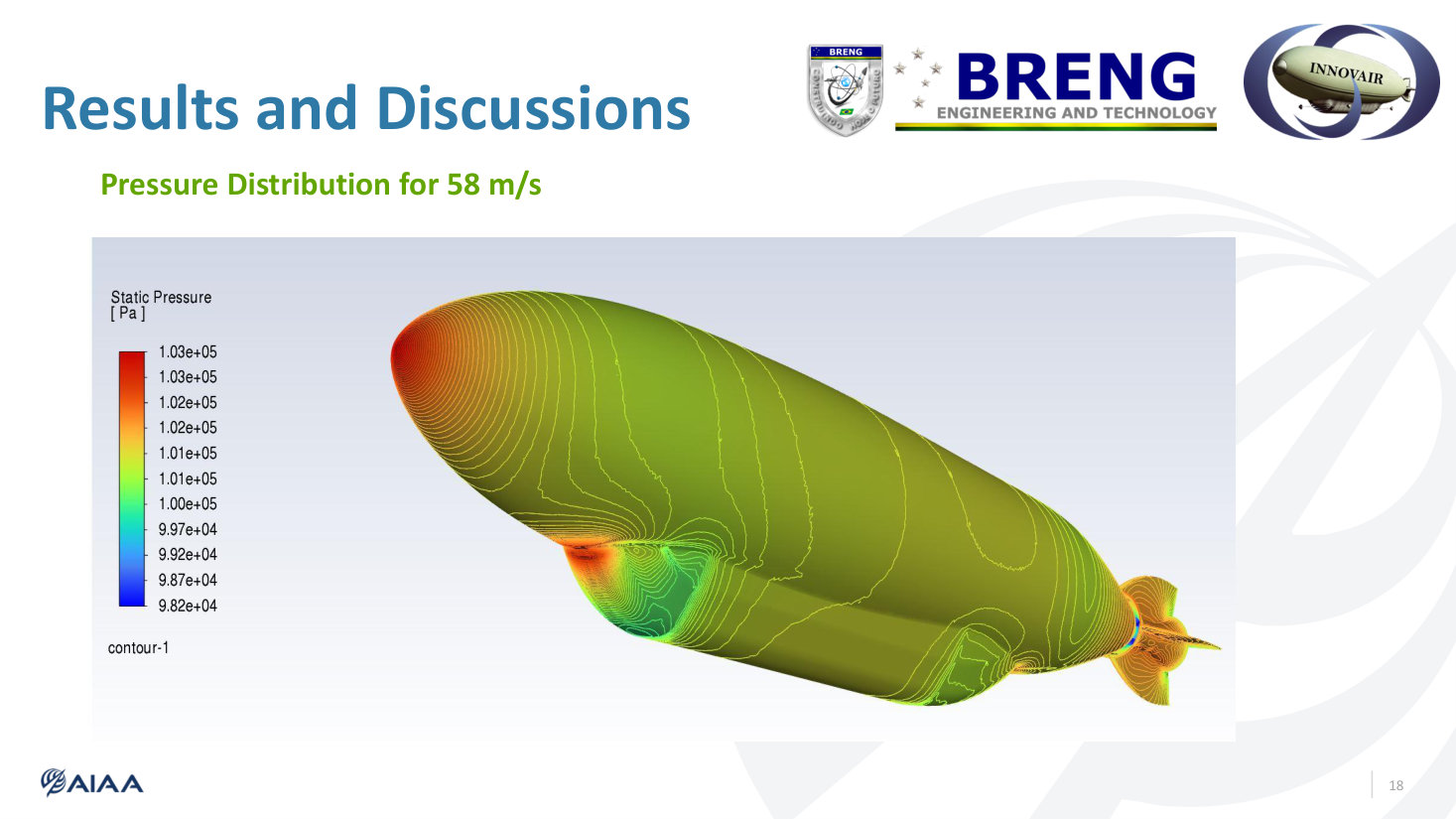
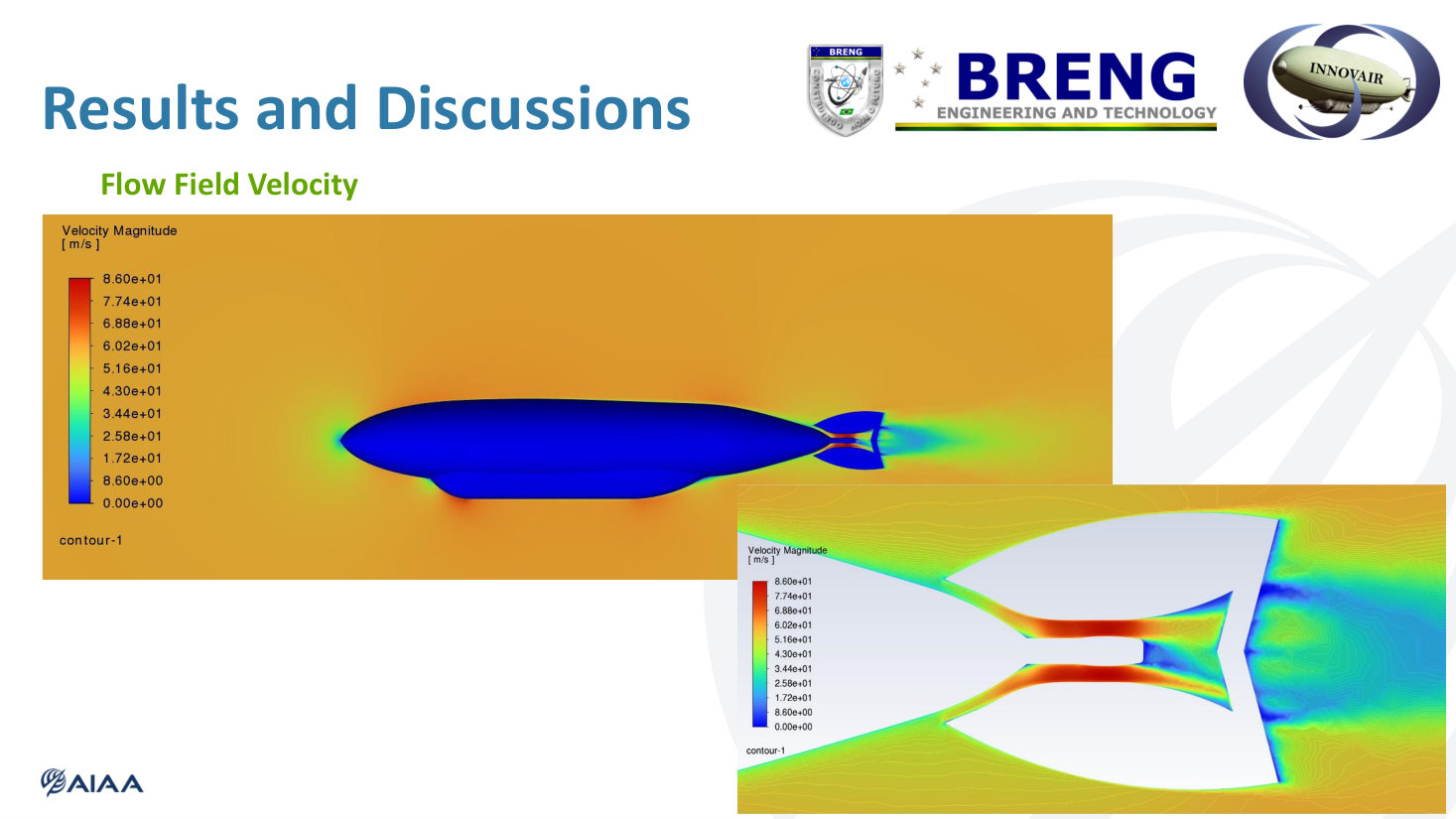
Presented by Dr. Felipe J. da Costa, the 2D and 3D Computational Fluid Dynamics studies analyzed the Explorer at sea-level conditions, at 58 m/s and 39 m/s, using a pressure-based transient solver with the k–ω SST turbulence model and meshes of up to 6.5 million elements, refined along the hull, nose, aft region and wake.
- Total aerodynamic drag: 40,408 N at 58 m/s and 18,345 N at 39 m/s
- Drag coefficient of about 0.21, in agreement with the technical literature for airships of similar scale
- Subsonic regime (Mach ≈ 0.17 and 0.11), with negligible compressibility and no relevant thermal effects
- Required power: 2.34 MW (≈3,182 hp) at 58 m/s and only 0.71 MW (≈965 hp) at 39 m/s
The simulations show that the Explorer exhibits aerodynamic behavior compatible with its intended operational envelope, with stable flow characteristics and consistent pressure distributions. Drag follows the theoretical quadratic dependence on velocity with high accuracy, confirming the physical consistency of the numerical model and establishing a solid basis for the continuation of the Eternaus Program.
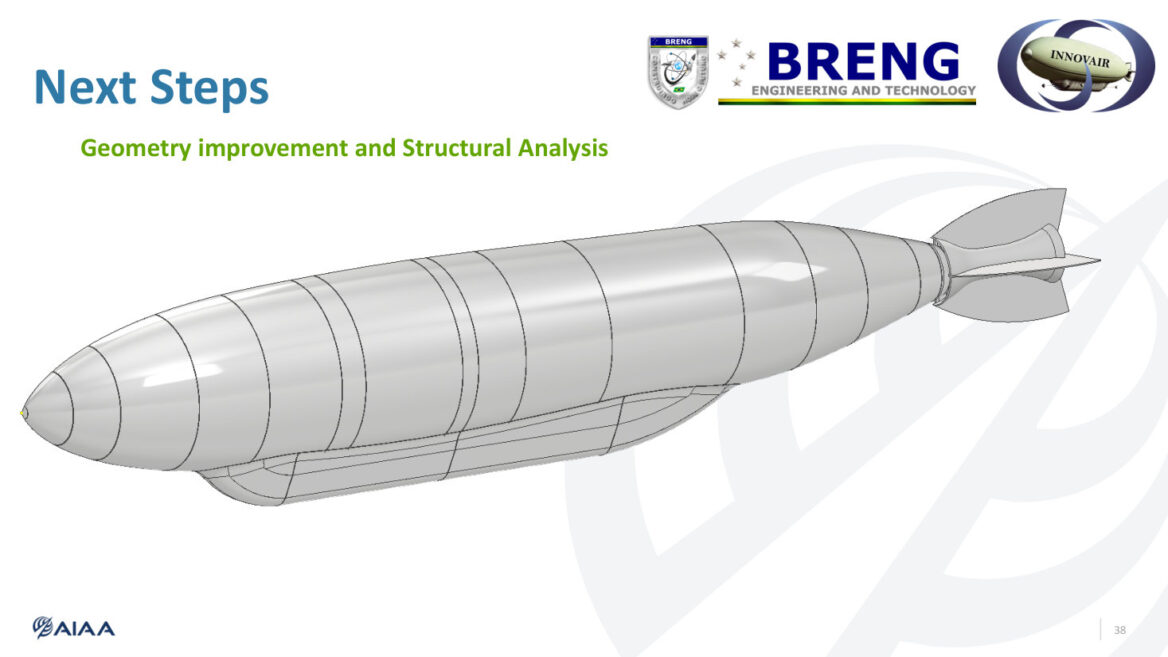
The next steps include geometric optimization — especially in the aft region and at the interface with the empennage — structural analysis, crosswind investigations and transient wake studies.
Aviation has always sought the sky. Eternaus seeks the entire planet.
